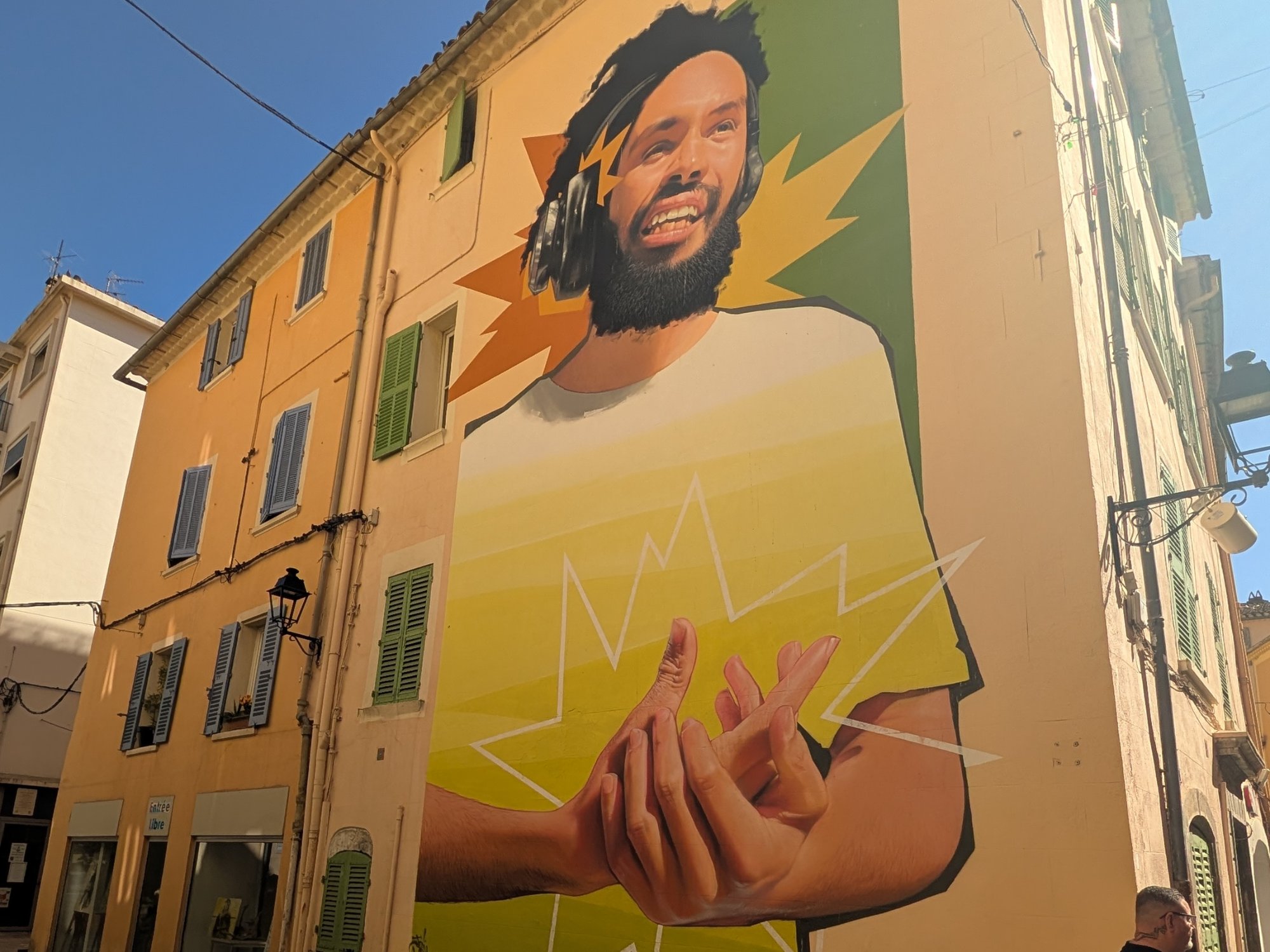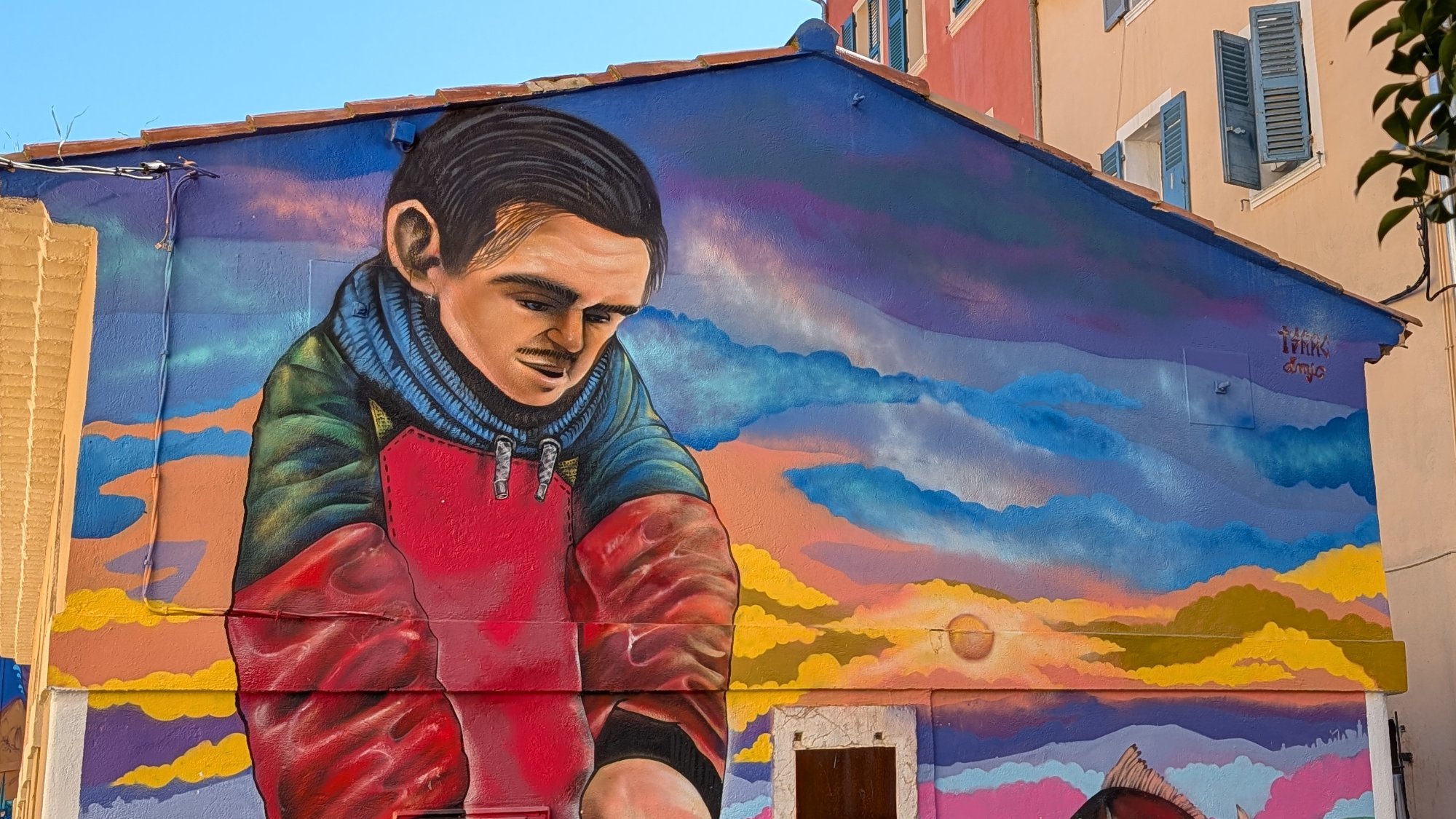
The shipyards closed in 1989 and the big bridge stopped lifting. Now the old center of La Seyne-sur-Mer is covered in murals.
The first thing most visitors notice in La Seyne-sur-Mer is a steel bridge standing straight up in the air. The Pont Levant, also called the Pont des Chantiers, was built in 1917 by the Daydé company to carry the railway from the town's station into the shipyards of the Forges et Chantiers de la Méditerranée. The yards closed for good in 1989, the bridge had nothing left to let through, and today it stays fixed in its raised position. A panoramic lift takes you up to a viewing platform 40 meters above the quay.
The bridge doesn't lift anything anymore. These days the walls behind it do that job.
That bridge says a lot about the town behind it. La Seyne sits across the harbor from Toulon, and it still feels like a working town rather than a postcard. Its old center is all narrow lanes and small squares, and over the last decade the town has been painting them. The slogan the town hall gave the project was Redonnons des couleurs au centre-ville, roughly "let's give the town center its colors back," and by 2024 there were about 40 murals spread across its neighborhoods.
Many of the newest walls come from the MiniFest, the town's street art festival. Each edition brings in around twenty artists who paint ten to fifteen new murals. The early editions were run with the association Graphikart, and by 2024 the town was organizing the festival itself. That year's line-up included Kobra from Brazil, Dopie from the Netherlands, Braga from Portugal and Valé from Mexico. L'Impasse, a bar in the center, has hosted artist residencies for more than ten years.
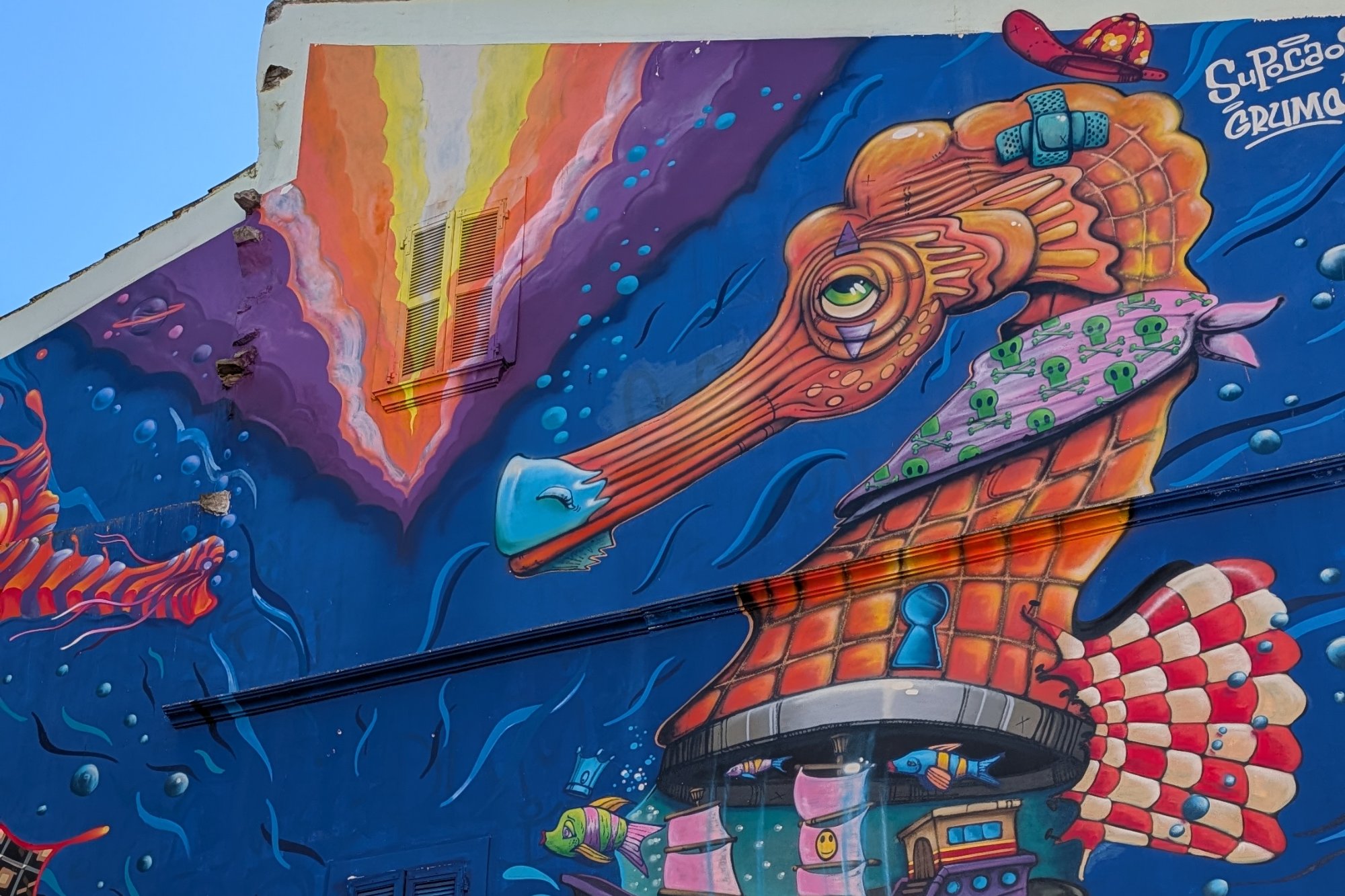
Start on the port. On a wall at the corner of rue Ramatuelle and quai Saturnin-Fabre is a Marianne by the artist Snake, the figure of the French Republic painted with words like résiste and liberté. In 2021 it took third place in Golden Street Art, a national contest for the best mural in France. From there, head into the lanes and look for Dopie's animals: a pink rabbit on Place des Moussi, a fish on Place de la Lune, a giraffe across from the theater and a green bulldog at L'Impasse itself.
On Place Perin, the Brazilian artist Rita Waimer painted Je pense à toi ("I'm thinking of you") in 2017, a piece about saudade, the Portuguese word for a longing that has no easy English equivalent. One of the earliest big pieces is by Hopare, at 43 impasse Noël Verlaque, from January 2016. If you want more after that, the old industrial site of Bois-Sacré has been an open-air graffiti gallery for about twenty years.
You can wander and find the walls on your own, but the tourist office sells a street art booklet with a route on the town map, and it saves a fair amount of doubling back.
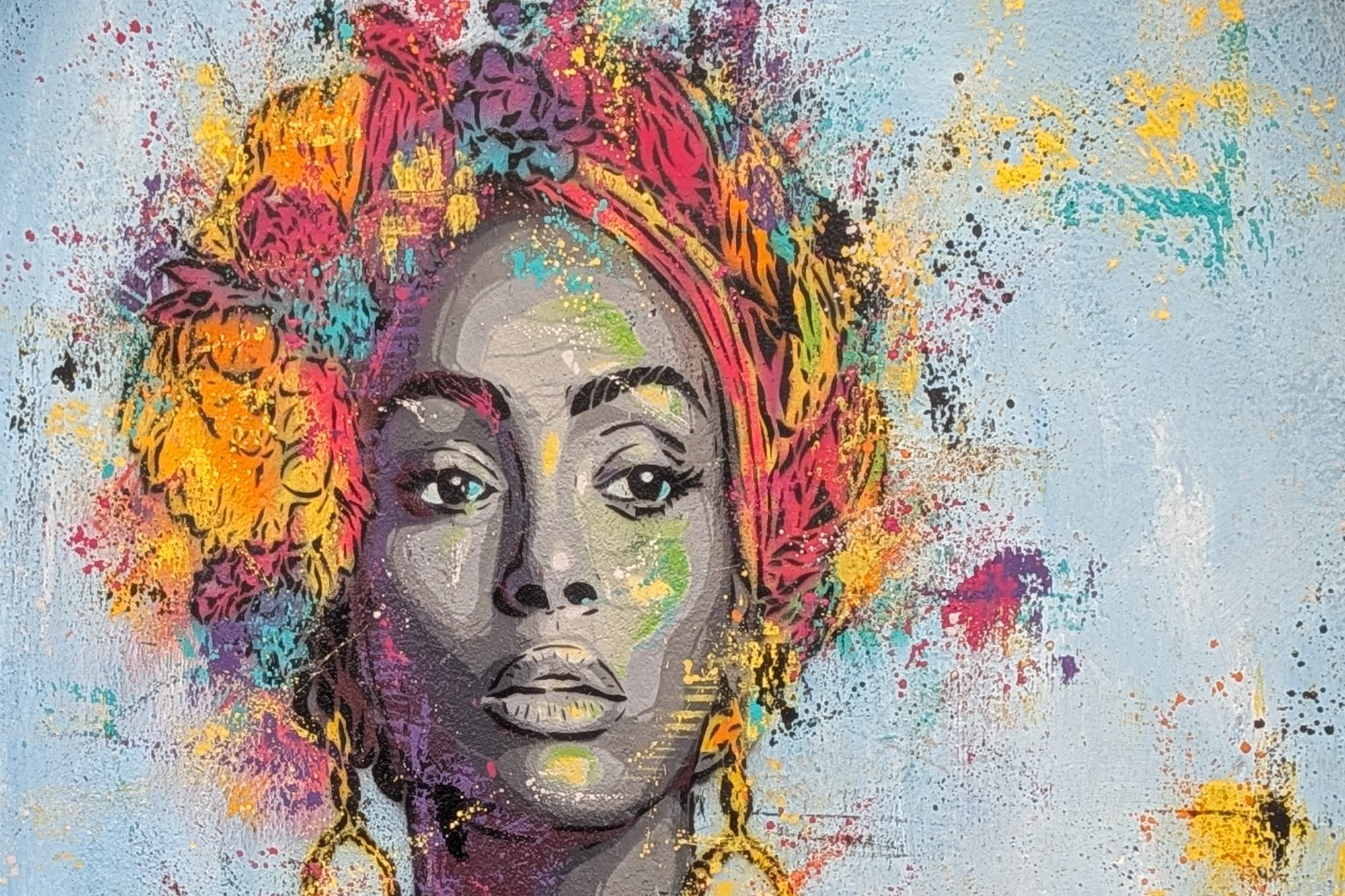
Do the walk in the morning, any day but Monday, so you can end at the market. The Provençal market fills Cours Louis Blanc, just behind the port, under the plane trees, Tuesday to Sunday from 8:30 a.m. to 12:30 p.m. There's fruit and vegetables, cheese, charcuterie, spices and fabric, and it is canceled in bad weather. Look for cade, the chickpea-flour flatbread of the Toulon coast, and eat it while it's warm.
Then go for coffee a few minutes away, at 5 rue de la République. Torréfaction La Cigale has been roasting coffee there since 1929. It roasts 100% arabica each week, one origin per batch, and sells it as beans or ground, alongside teas and Voisin chocolates. There's a tea room and a terrace if you'd rather drink it on the spot than take a bag home.
The bridge doesn't lift anything anymore. These days the walls behind it do that job.